To calculate stacking load, identify box dimensions, select a test duration, and apply the appropriate structural design factors. Use the formula W = (A x P) / SF, where A is area, P is pressure, and SF is the safety factor.
- Stacking load depends on the bottom area, applied pressure, and required safety factor.
- Always use the net bottom area of the box, not the outer dimensions.
- Test duration and material quality directly affect the calculated safe limit.
- Document all calculations to support packaging engineering decisions and supply chain planning.
Why Stacking Load Matters in Structural Design
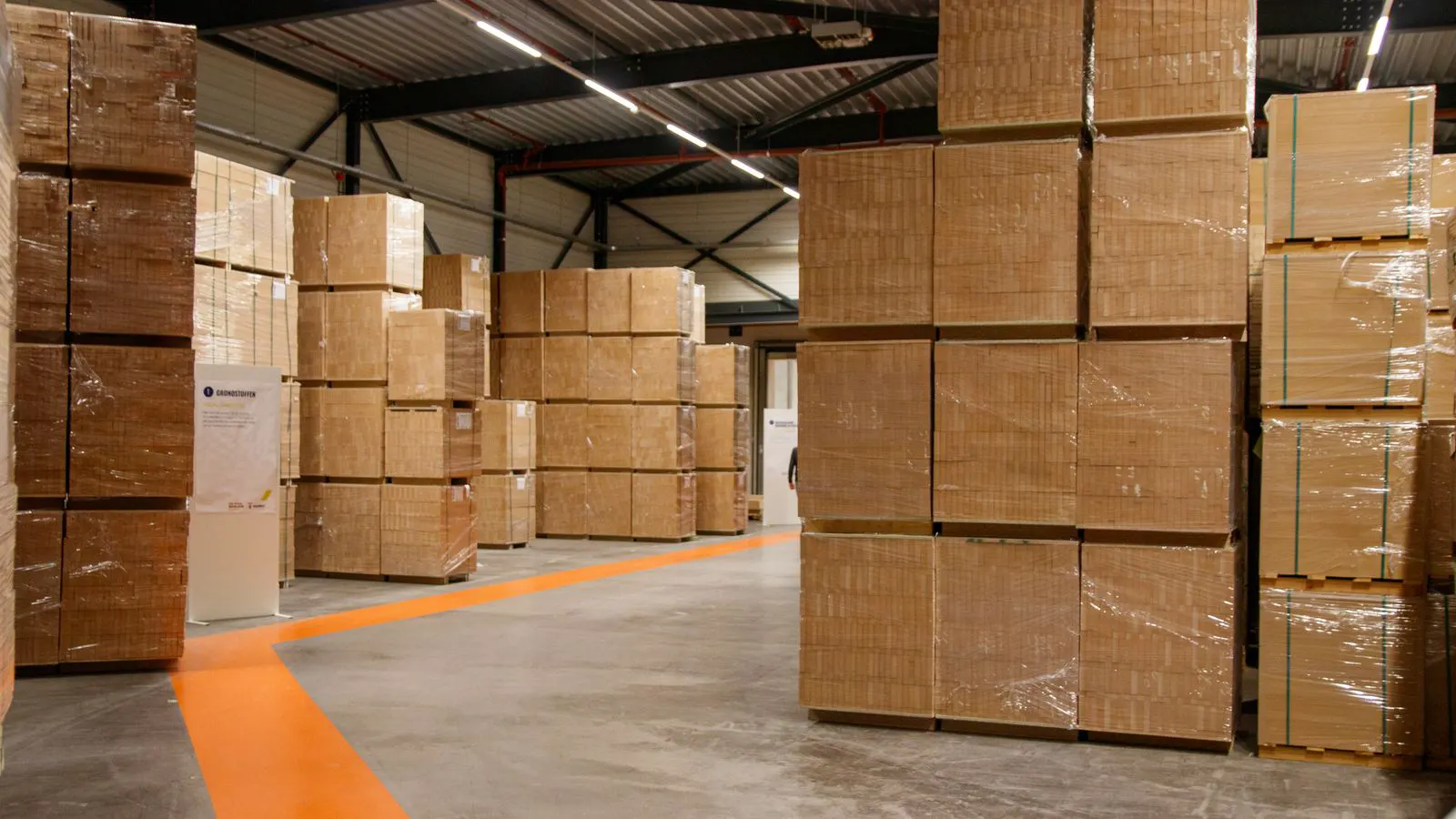
Heavy cardboard boxes fail under vertical compression when the bottom board buckles or the flutes collapse. In a warehouse, a stack that looks stable at the loading dock can shift during transport or settle under its own weight. The stacking load defines the maximum vertical force the box can support without permanent deformation.
Packaging engineers use this metric to size pallets, plan warehouse racking, and verify that a container will survive the full height of a stack. Getting the number wrong leads to crushed goods, damaged product, and costly rework. The calculation is straightforward once you know the inputs and apply the correct structural design logic.
What You Need Before You Start
Gather the box dimensions, the expected stack height, and the material test data. You also need to decide on a test duration, which determines how long the box must hold the load without significant creep. Typical durations range from 2 hours to 24 hours, depending on the application and the material’s viscoelastic behavior.
The bottom board’s fluting and basis weight are critical. A double-wall box with a higher basis weight supports more weight than a single-wall box of the same size. If you do not have test data, use conservative estimates based on the material grade and the expected storage conditions.
Step 1: Measure the Net Bottom Area
Measure the internal length and width of the box bottom. Multiply these two values to get the net bottom area in square inches or square centimeters. Do not use the outer dimensions, which include the wall thickness and any die-cut features.
This step matters because the load is distributed across the entire bottom surface. A box with a die-cut handle or a scored line has a reduced effective area. Using the gross area overestimates the load capacity and creates a false sense of safety.
Step 2: Determine the Applied Pressure
Identify the weight of the contents and the box itself. Divide the total weight by the net bottom area to get the applied pressure. In imperial units, this is pounds per square inch. In metric units, use newtons per square centimeter.
For example, a 100-pound product in a box with a 200 square inch bottom area creates a pressure of 0.5 psi. This value is the baseline load the structure must resist. If the box contains a liquid, account for sloshing and dynamic forces by applying a higher safety factor.
Step 3: Select the Safety Factor
The safety factor accounts for variations in material strength, manufacturing consistency, and handling errors. A typical safety factor for static stacking is 2.0 to 3.0. For dynamic applications, such as pallets moving on a forklift, use a higher factor.
A higher safety factor increases the calculated load limit but may lead to over-design. Over-design increases material cost and shipping weight. Balance the factor against the risk of failure. If the product is fragile or the stack is very tall, lean toward the higher end of the range.
Step 4: Apply the Stacking Load Formula
Use the formula: W = (A x P) / SF, where W is the stacking load in pounds or newtons, A is the net bottom area, P is the applied pressure, and SF is the safety factor. Rearrange this to solve for the maximum safe load.
If you are designing a new box and know the target load, solve for A or SF. This helps you choose the right fluting and basis weight. For example, if you need to support 500 pounds with a safety factor of 2.5, you need a bottom area of 250 square inches at a pressure of 50 psi.
Step 5: Account for Stack Height and Distribution
A single box on the floor bears only its own weight. A box in the middle of a stack bears the weight of all boxes above it. The top box bears the least, and the bottom box bears the most. Calculate the load for the bottom box first, as it is the critical point.
For a stack of n boxes, each holding the same load, the bottom box supports n times the individual weight. If the boxes are not identical, sum the weights of all boxes above the critical point. This step is often skipped in quick estimates and leads to underestimating the required strength.
Step 6: Factor in Material Degradation and Environment
Cardboard absorbs moisture from the air. High humidity softens the flutes and reduces the compressive strength. If the boxes will be stored in a humid environment, reduce the calculated load or increase the safety factor.
Temperature also affects the material. Cold storage makes the board stiffer but more brittle. Heat makes it softer and more prone to creep. Review the storage conditions and adjust the structural design accordingly. If the boxes will be exposed to rain or condensation, use a moisture-resistant liner or coating.
Common Mistakes in Stacking Load Calculations
Using outer dimensions instead of net bottom area is the most frequent error. It overstates the load capacity and creates a dangerous gap between the design and reality. Another mistake is ignoring the stack height. A box that passes a single-box test may fail when placed at the bottom of a twelve-box stack.
Engineers also skip the test duration. A box that holds a load for 30 minutes may sag significantly after 24 hours. Creep is a slow, permanent deformation that accumulates over time. Specify the test duration in your packaging engineering documentation to ensure the calculated load is relevant to the actual service life.
Final Verification Step
Once you have the calculated stacking load, verify it with a physical test. Place the box on a flat, rigid surface. Stack the same number of boxes on top of it, using the calculated weight. Measure the compression after the specified test duration.
If the box shows more than 10% compression or visible buckling, the calculation is too optimistic. Revisit the inputs. Check the net area, the safety factor, and the material data. Adjust the design until the test passes with a margin. Document the test results alongside the calculation to create a complete structural design record.
Reference Table for Typical Stacking Loads
The table below shows approximate stacking loads for common double-wall boxes. These values are estimates and must be verified with physical testing for your specific material and application.
| Box Size (inches) | Fluting | Typical Stacking Load (lbs) |
|---|---|---|
| 12 x 18 | E | 150 - 250 |
| 18 x 24 | B | 300 - 500 |
| 24 x 36 | B | 500 - 800 |
| 18 x 24 | A | 400 - 600 |
| 24 x 36 | A | 700 - 1000 |
These ranges assume a safety factor of 2.5 and a test duration of 24 hours. Your actual values will depend on the basis weight, the quality of the paper, and the storage conditions.
How to Document Your Structural Design
Record all inputs, assumptions, and test results in a packaging engineering document. Include the box dimensions, the net bottom area, the applied pressure, the safety factor, and the test duration. Attach the physical test report and the calculation worksheet.
This documentation supports supplier negotiations, warehouse planning, and quality control. When a box fails in the field, you can trace the issue back to the design. You can also use the document to justify material upgrades or changes to the stack height.
When to Consult a Packaging Engineer
If the box contains high-value or fragile goods, or if the stack height exceeds five boxes, consult a packaging engineer. They can run finite element analysis to model the stress distribution and identify weak points. They can also recommend alternative materials, such as paperboard with a higher basis weight or a different fluting pattern.
For standard applications, the step-by-step method described above is sufficient. It provides a reliable estimate of the stacking load and helps you avoid the most common structural design errors.
Final Thoughts
Calculating the stacking load is a fundamental part of structural design. It requires attention to detail in the measurements, a clear understanding of the forces involved, and a practical safety factor. By following the steps in this guide, you can determine the safe vertical weight limit for your cardboard boxes and reduce the risk of damage in the supply chain.
Start with the net bottom area. Apply the correct pressure. Select a reasonable safety factor. Test the result. This process turns a vague estimate into a defensible engineering value. Use it to make informed decisions about box selection, pallet configuration, and warehouse layout.
Frequently asked questions
What is the difference between stacking load and edge crush test?
Stacking load measures the vertical compression force the entire bottom of the box can support. Edge crush test measures the compressive strength of the board along one edge. They are related but test different failure modes.
How does moisture affect the calculated stacking load?
Moisture reduces the compressive strength of the paperboard. As the board absorbs water, it becomes softer and the flutes collapse more easily. You must reduce the calculated load or increase the safety factor for humid environments.
Can I use the same stacking load for single-wall and double-wall boxes?
No. Double-wall boxes have a higher basis weight and two layers of fluting, which provides significantly more compressive strength. You must calculate the stacking load separately for each wall thickness and fluting type.
What if the box has a die-cut handle?
A die-cut handle reduces the effective bottom area. Measure the net area excluding the cutout. If the handle is large, the load distribution is uneven, and you should apply a higher safety factor or reinforce the area.
How long should I test for stacking load?
The test duration depends on the application. For static storage, use 24 hours. For dynamic handling, use a shorter duration but apply a higher safety factor. Always specify the duration in your packaging engineering documentation.