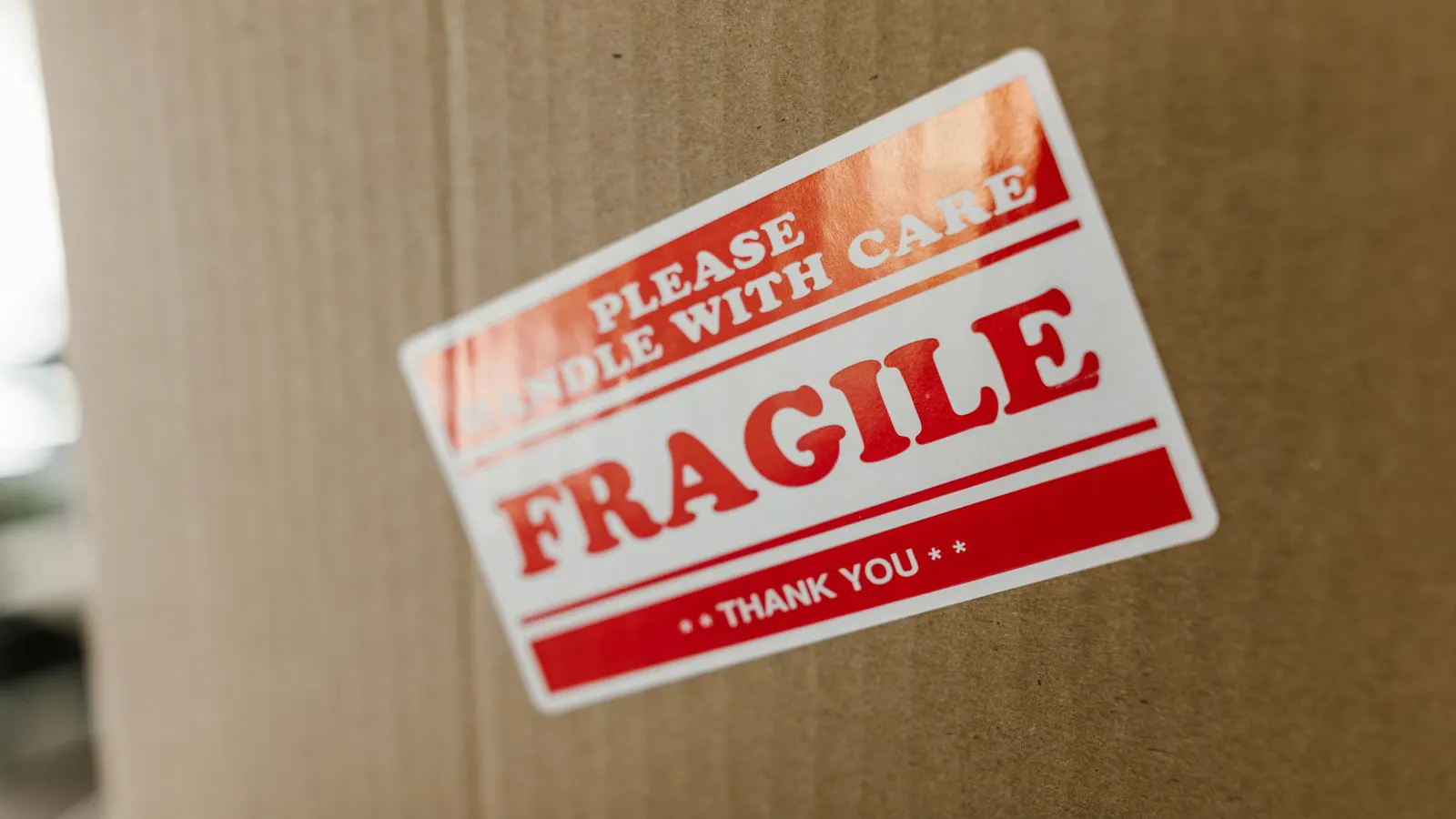
Corrugated board grades (E, B, C, D, G) differ in thickness and strength. Heavier grades offer better crush resistance, while lighter grades save weight and cost. Choose the grade based on the load, handling, and shipping distance.
- Board grades E, B, C, D, and G represent increasing thickness and strength.
- Thicker board costs more and weighs more, but it resists crushing better.
- Match the grade to the product weight and the distance the box travels.
- Always specify the board grade and flute size together in a purchase order.
- Do not assume a thicker grade is always better. It may be wasteful.
What Do Board Grades E, B, C, D, and G Mean?
Corrugated board is constructed by gluing a central corrugated flute to two flat sheets known as faces. The thickness of that central flute and the weight of the faces determine the board grade. In international standards, board grades are labeled with letters. E is the thinnest. G is the thickest.
The grade tells you the approximate total thickness of the board. It also signals the expected weight and structural capacity. A box made from E-grade board is light and thin. A box made from G-grade board is thick and heavy.
Buyers often ask which grade is best. The answer depends on the product and the shipping method. A light product like a book or a bag of coffee does not need a thick wall. A heavy product like a power tool or a glass bottle does.
When a supplier quotes a price, the grade is the primary variable. A G-grade sheet costs significantly more per square meter than an E-grade sheet because it contains more paper pulp and more adhesive. The letter is not just a name. It is a specification of material quantity and performance.
How Thickness Affects Strength and Cost
Thickness is the main driver of cost. A thicker board uses more paper and more glue. It weighs more. Shipping a heavier box costs more.
Thickness also drives crush resistance. When a box sits in a warehouse, the weight of the boxes above it presses down on the bottom. If the board is too thin, the flutes crush and the box fails. A thicker board spreads that load better.
The face sheets also matter. A board can have the same flute size but different face weights. A heavier face sheet adds stiffness and tear resistance.
There is a limit to thickness. Beyond a certain point, adding more board does not proportionally increase strength. It mostly increases weight and cost. This is why engineers look for the minimum grade that meets the load requirements.
Crush resistance is not the only strength metric. Edge crush strength matters for stacking. If a box is placed on top of another box, the edge of the board takes the load. A thicker board with heavier faces handles edge crush better than a thin board with light faces.
How to Choose the Right Grade for Your Product
Start with the product weight. Put the product in a sample box. Close the box. Lift it. Can you lift it with one hand? If yes, you can likely use a lighter grade. If the box feels heavy or the walls feel soft, you need a heavier grade.
Next, look at the stacking. If the box goes on a pallet in a warehouse for months, the bottom boards will bear a lot of weight. You need a thicker grade for the bottom.
Finally, consider the shipping distance. A box that travels long distances in a truck or a container faces more bumps and drops. A heavier grade holds up better to impact.
Product fragility is another factor. If the contents are fragile, the box wall must resist puncture and compression. A thin board may puncture if a sharp object presses into it. A thicker board provides more material to distribute that point load.
Consider the environment. If the box will be stored in a damp area, the board may absorb moisture. Moisture weakens the adhesive and reduces crush resistance. In such cases, you may need to move up a grade to compensate for the loss of strength.
Board Grade Comparison Table
The table below shows the general characteristics of the main board grades. Actual numbers vary by manufacturer and region.
| Board Grade | Typical Thickness | Strength | Weight | Best For |
|---|---|---|---|---|
| G | 1.5 mm to 2.0 mm | Very high | Heavy | Heavy products, long stacking, long shipping |
| D | 1.2 mm to 1.5 mm | High | Heavy | Heavy products, moderate stacking |
| C | 1.0 mm to 1.2 mm | Medium | Medium | General use, light to medium products |
| B | 0.8 mm to 1.0 mm | Medium | Light | Light products, short shipping, display |
| E | 0.5 mm to 0.8 mm | Low | Very light | Very light products, short runs, retail |
How Board Type and Flute Size Work Together
Board grade and flute size are linked but not the same. The grade refers to the total thickness of the board. The flute size refers to the size of the corrugated wave in the middle.
A board can be C-grade with a small flute or a large flute. The flute size affects the box stiffness. A larger flute makes the box more rigid. A smaller flute makes the box more compact.
When you specify a box, you should list both. For example, a C-grade board with a medium flute is common for general shipping. A G-grade board with a large flute is common for heavy industrial goods.
Flute size also affects the box height. A large flute takes up more vertical space. If you are shipping flat items like books or electronics, a smaller flute keeps the box profile low. This reduces the air volume inside the box, which can lower shipping costs if you are charged by dimensional weight.
The combination of grade and flute size creates distinct performance profiles. A D-grade board with a small flute is strong and compact. A G-grade board with a large flute is very strong but bulky. Choose the combination that fits your product and your logistics.
Common Mistakes in Board Selection
Many buyers make the same mistake. They ask for the thickest board they can find. They think it is the safest choice. It is not.
A too-thick board is wasteful. It costs more to buy and more to ship. It may not even fit in the box if the box is designed for a thinner board.
Another mistake is mixing grades without reason. Some boxes use a light grade for the top and a heavy grade for the bottom. This is fine if the bottom bears the weight. But if the top is also light, the box may feel weak.
Buyers also ignore the flute size. They specify the grade but not the flute. The supplier may default to a standard flute size that does not match the box design. This can lead to weak walls or excessive height.
Another error is assuming that all “C-grade” boards are the same. They are not. A C-grade board from one region may have a heavier face weight than a C-grade board from another. Always check the face weight specification.
A Worked Example in Plain Words
Imagine you ship a box of ceramic mugs. The mugs are heavy. The box will sit on a pallet in a warehouse for two weeks. Then it will ship in a truck for three days.
If you use an E-grade board, the box will be light. But the bottom may crush under the weight of the mugs and the boxes above it. The flutes may fail.
If you use a C-grade board, the box will be stiffer. It will handle the mugs better. But it is heavier than needed.
If you use a D-grade board, the box will be strong. It will handle the mugs and the shipping easily. It will not crush in the warehouse. It is a good balance.
If you use a G-grade board, the box will be very strong. But it is heavy and expensive. It is overkill for mugs.
So, for mugs, a D-grade board is a good choice. It provides enough strength without wasting cost.
Consider the contents again. If the mugs are packed in a cardboard divider, the box walls do not take as much direct impact. You might even get away with a C-grade board. If the mugs are loose in the box, they will bang against the walls. You need a D-grade board to absorb that impact.
How to Verify the Board You Receive
When you order board, specify the grade and the flute size in writing. Do not just say “standard board.”
When the board arrives, check the edge. You can see the flute size. You can measure the thickness with a caliper.
If the board looks thin, measure it. If it is thinner than specified, raise it with the supplier.
If the board feels soft, test it. Bend a small piece. If it bends easily, it may not have the expected stiffness.
Keep a sample of the board you accept. If a future batch looks different, compare it to your sample.
Also check the face weight. A board with the right thickness but the wrong face weight will not perform as expected. A light face sheet will tear easily. A heavy face sheet will add unnecessary weight.
Final Thoughts on Choosing the Right Grade
There is no single best board grade. The best grade is the one that fits your product and your shipping method.
Light products use light grades. Heavy products use heavy grades. Long distances and long stacking require more strength.
Start with a C-grade board for most general use. Move to D if the product is heavy. Move to G if the product is very heavy or the shipping is rough.
Always test. Put the product in the box. Close it. Lift it. Stack it. See how it feels.
A good board grade choice saves money. A bad one wastes money.
Frequently asked questions
Can I use a lighter grade for a heavy product?
No. A lighter grade will not resist crushing. The bottom will fail under the weight.
Is G-grade board always the strongest?
Yes, in general terms. G-grade is the thickest and heaviest. But it is overkill for light products.
How do I know if my current grade is too heavy?
If the box is heavy and the product is light, you may be wasting cost. Try a lighter grade and test it.
What is the difference between board grade and flute size?
Board grade is the total thickness. Flute size is the size of the corrugated wave. They are related but different.
Do I need to specify the grade in a purchase order?
Yes. Specify the grade and the flute size. Do not assume the supplier will choose for you.